Wire Fraud in Home Buying: How to Protect Your Closing Funds from Scammers
Buying a home is exciting, but it also puts you in the crosshairs of one of the fastest-growing types of financial crime: wire fraud. On a recent episode of the Lofty Lender Home Buyer Education podcast, hosts Kyle Guldenpfennig and Charlie Chedester broke down exactly how these scams work, shared real stories from their own clients and families, and laid out the simple habits that can keep your closing funds safe.
Here's what every buyer, seller, and real estate professional needs to know about wire fraud and email scams before closing day.
Why Home Buyers Are a Target for Wire Fraud
A home purchase involves a long list of people exchanging emails: your loan officer, your real estate agent, the agent's assistant, the title company, and sometimes an insurance agent too. Every one of those relationships is an opportunity for a scammer to slip in and look legitimate.
As Kyle put it on the episode, with so many people emailing you throughout the process, it becomes genuinely difficult to tell who's real. Scammers know this, and they exploit it.
Kyle shared a firsthand example: his own wife's email was hacked, and a client received a message that appeared to come from Kyle asking for closing funds to be wired instead of the cashier's check they'd already discussed. The email had Kyle's name, the correct property address, and even his last name spelled correctly. Fortunately, the client noticed the request didn't match their prior conversation and called Kyle directly to confirm before sending anything.
That phone call likely saved the client tens of thousands of dollars.
How Mortgage Wire Fraud Scams Actually Work
A wire transfer is an electronic, direct movement of money from one bank account to another. Unlike a check or a credit card charge, a wire cannot be reversed once it's sent. That's exactly why scammers target them.
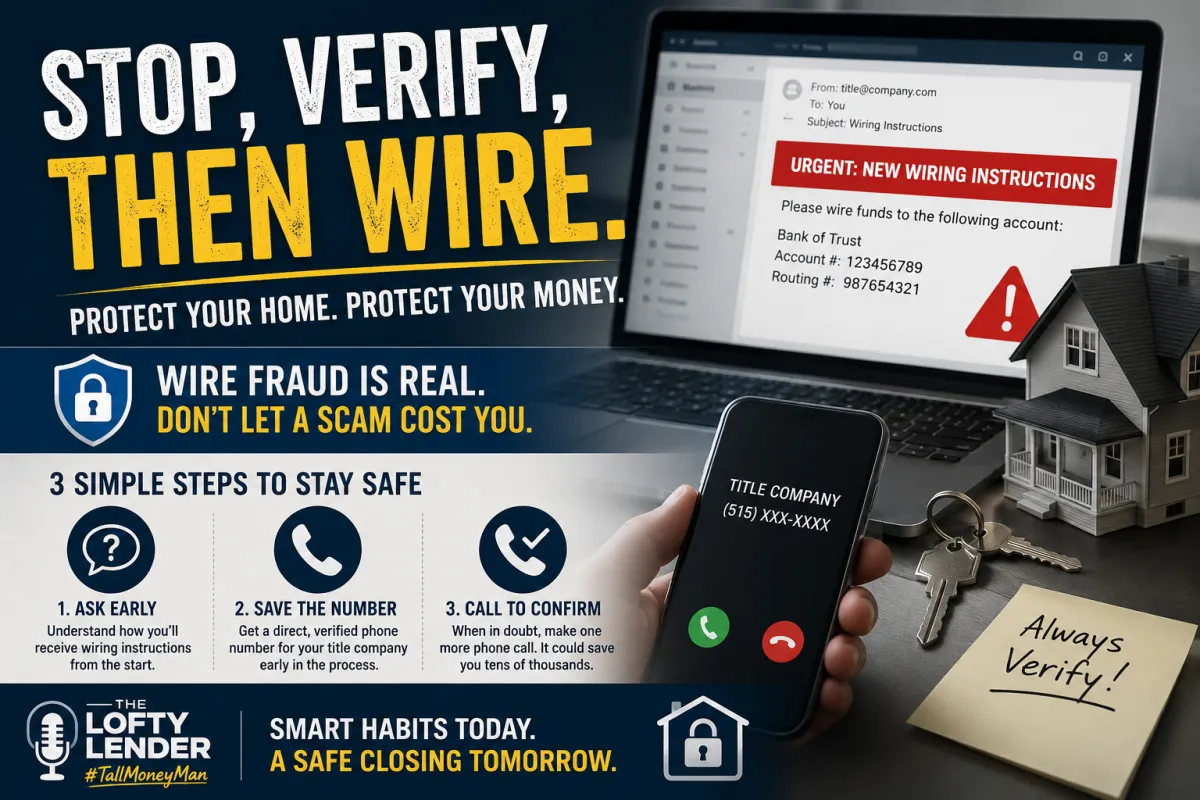
The typical scam plays out like this: a few days before closing, the buyer receives an email that looks like it's from the title company or lender. It says wiring instructions have changed, or that funds need to be sent immediately to close on time. The email often includes real details, the property address, the buyer's name, the closing date, and a convincing logo or signature, so it looks completely legitimate. The only thing that's fake is the bank account on the receiving end.
By the time anyone realizes what happened, the money is typically gone, often wired to an offshore account with no way to trace or recover it.
Beyond Wire Fraud: Passwords, Public Wi-Fi, and AI-Generated Scams
Charlie pointed out that wire fraud is just one piece of a bigger picture. A few other vulnerabilities came up in the conversation:
Reused passwords are a major risk. If a scammer compromises one account, they'll try that same password everywhere else, especially on large platforms like Gmail, Chase, or Wells Fargo, simply because those companies have the most account holders and therefore the most opportunity.
Public Wi-Fi is another weak point. Charlie noted that even a protected email account can be intercepted if you're using an unprotected connection, like the Wi-Fi at a coffee shop.
AI is making scams harder to spot. Fraudsters can now use AI to spoof entire websites or emails, recreating a lender's or title company's look and feel almost perfectly, right down to a fake link that mimics the real company's site.
The two also discussed how "spoofing" is becoming the most common tactic. In many cases, an email account was never actually hacked. It just looks that way, because a scammer copied the name, signature, and formatting well enough to fool the recipient.
Three Actionable Steps to Avoid Wire Fraud
Kyle and Charlie closed the episode with three concrete takeaways every buyer should follow:
1. Ask early. During your very first conversation with your lender or title company, ask how you'll receive your wiring instructions and what the process looks like. Knowing what to expect makes it much easier to spot something that's off later.
2. Save the title company's phone number. Get a direct, verified number from your title company early in the process so you always have a trusted way to confirm instructions, rather than relying on a phone number provided in a suspicious email.
3. When in doubt, make one more phone call. Never hesitate to double check. A five-minute phone call could protect you from a mistake that costs tens of thousands of dollars.
The Golden Rule: Stop, Verify, Then Wire
If you take away one thing from this conversation, let it be this: never trust an email alone when money is involved. Always verify wiring instructions with a phone call to a number you already know and trust, not one provided in the email itself. Confirm details partially, rather than reading a full account or routing number aloud and letting someone simply agree.
As Kyle summed it up: stop, verify, then wire.
Wire fraud is a real and growing threat in real estate, but it's also one of the easiest risks to avoid once you know the warning signs. Buying a home is one of the biggest financial decisions you'll ever make, so don't let a rushed decision put it at risk.
Listen to the Full Conversation
This article covers the highlights, but the full episode goes even deeper into real client stories, password security, and how to spot a scam before it costs you. Search for The Lofty Lender with #TallMoneyMan wherever fine podcasts are downloaded to listen to the complete episode and catch every future one.
Have questions about your home buying process or think you may have received a suspicious wiring request? Reach out to your Kyle Guldenpfennig a/k/a #tallmoneyman with the Lofty Lender team before you send a dime.