Why Everyone Seems to Be Moving to the Des Moines Metro Right Now | The Lofty Lender
If you've sold a house lately, showed a listing, or just talked to your neighbors, you've probably noticed the same thing Charlie Chedester and I have noticed in our pipelines this year: a lot of our buyers aren't from around here anymore. On this week's episode of the Lofty Lenders Home Buyer Education podcast, we dug into why out-of-state buyers are flooding into Waukee, Ankeny, Bondurant, Norwalk, Altoona, Grimes, Urbandale, and the rest of the Des Moines metro, and what it means if you're trying to buy a home here right now.
Wait, Isn't Iowa Losing People?
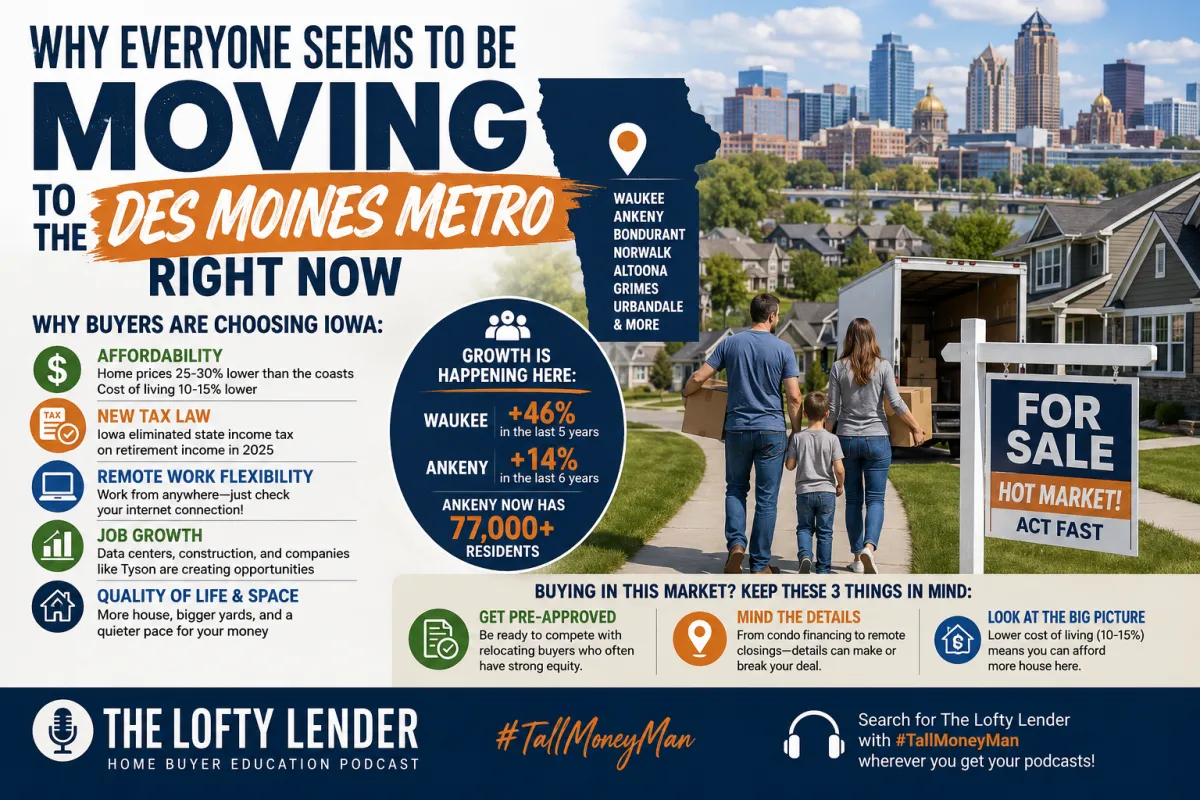
Here's the twist: according to United Van Lines and Atlas Van Lines data, Iowa and Nebraska both technically rank among the top outbound states in the country, meaning more people moved out than moved in over the last year. But that statewide number hides what's actually happening in the metro areas. Waukee has grown 46% in the last five years. Ankeny is up 14% over the past six years and now sits above 77,000 residents. Omaha has added another 25,000 people. The growth isn't spread evenly across Iowa, it's concentrated in the suburbs ringing Des Moines, and that's exactly where Charlie and I are seeing the buyer surge.
Who's Actually Moving Here
In our own pipelines right now, we've got a veteran relocating, someone returning from active military service, a couple from Connecticut, and buyers coming in from Chicago and Minnesota. Charlie's seeing a similar mix: adult kids moving back to be near family, plus retirees and move-up buyers cashing out of hot coastal markets. One couple sold a home near Kansas City for over a million dollars, a house they originally bought for a couple hundred thousand, because the city had grown out to meet them, and they're using that equity to buy big here.
We're also seeing a generational split. Kyle's pipeline skews toward more first-time buyers; Charlie's skews toward older, move-up buyers, especially retirees relocating to be closer to grandkids, nieces, and nephews.
Why Iowa, Why Now
A few things are stacking up in the metro's favor:
Affordability is the biggest driver. Home prices in the Midwest run roughly 25-30% cheaper than on the coasts, and cost of living is 10-15% lower. A $150,000 salary in San Francisco reportedly has the real purchasing power of about $68,000 once you adjust for local expenses. Bring that same salary to Des Moines and suddenly you're buying a lot more house.
Iowa's tax law changed. As of 2025, Iowa eliminated state income tax on retirement income, removing one of the biggest reasons retirees used to flee to no-income-tax states like Florida. Charlie's noticing more retirees choosing to stay put or move back rather than relocate south.
Remote and hybrid work is still very real. Plenty of buyers can live wherever they want and still keep their job. Just be careful; Charlie and Kyle both flagged real stories of buyers moving to rural areas without realizing how spotty or expensive rural internet can be. Satellite options like Starlink are helping, but it's worth checking before you fall in love with a place in the middle of nowhere.
Job growth is real, if uneven. Data centers are driving a wave of construction jobs, though those roles taper off once a facility is built and only need a small permanent staff to operate. Meanwhile, companies like Tyson are adding new commercial space and positions, which supports longer-term metro growth.
Quality of life and space. Buyers from out of state are consistently amazed at how much yard, how much house, and how much quiet they get for the money here, whether that's a starter home in Ankeny or two acres out toward Winterset.
What This Means If You're Buying Here
Because so many relocating buyers are competing for homes in the same fast-growing suburbs as local first-time buyers (including recent Iowa State grads), inventory in these areas stays tight even when national headlines talk about cooling markets and falling affordability. Local demand plus out-of-state demand is keeping our market hotter than the national trend would suggest.
Three things to keep in mind if you're buying in this environment:
Get pre-approved before you fall in love with a listing. This matters even more in fast-growing suburbs where you're competing directly with relocating buyers who often have strong equity behind them.
If you're the one relocating, make sure your lender understands remote closings, multi-state logistics, and property details that can sink a deal late, like whether the property is a condo. We've seen a loan get denied at the last minute because a lender didn't handle condo financing and nobody caught it until it was too late. Details matter.
Don't just compare sticker price to your old market. Factor in that cost of living here typically runs 10-15% lower, which often means you can afford more house than the price tag alone suggests. Talk to a lender who's focused on your full budget, not just the purchase price.
The Bottom Line
"Everyone's moving to Iowa" oversimplifies what's happening, but the underlying trend is real. Metro growth driven by affordability, remote work flexibility, retirees staying put thanks to the new tax law, and people moving back home to be near family is reshaping Des Moines' fastest-growing suburbs right now.
Want the full conversation, including more buyer stories and market details? Search for The Lofty Lender with #TallMoneyMan wherever you get your podcasts, and subscribe so you don't miss next week's episode.